Is Opaquer Replacing Skater .NET Obfuscator?
Product Evolution & Overview
For over two decades, Skater .NET Obfuscator has served as an industry-standard protection tool for .NET assemblies, executables, and libraries. Designed by Rustemsoft LLC, it introduced reliable symbol scrambling, string concealment, and advanced control flow algorithms across desktop, cloud, and enterprise environments.
As modern Microsoft platforms advance through modern releases, software protection requirements have evolved. Opaquer carries forward the robust reverse-engineering prevention mechanisms established by Skater while modernizing the platform engine for elevated build-pipeline automation, enhanced execution speed, and seamless runtime protection.
Interface & Operational Modules
The primary interface elements established in Skater .NET Obfuscator lay the foundational workflow for configuration in modern binaries.
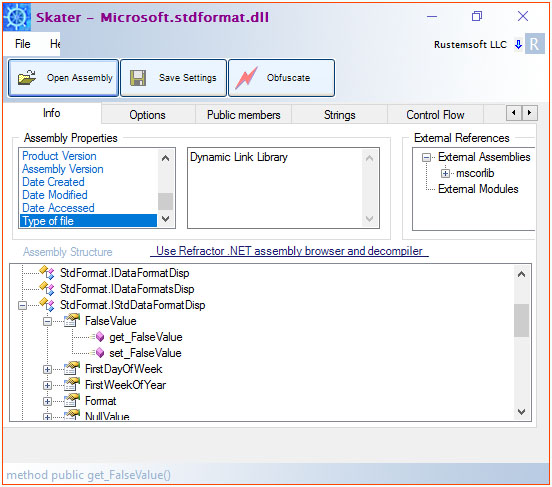 Main Workspace
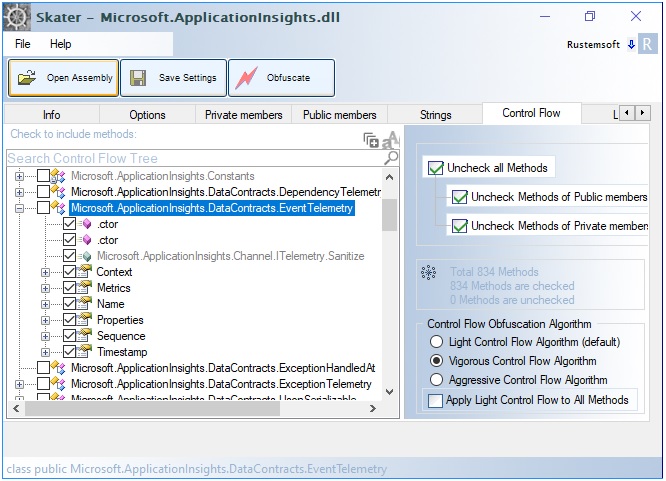 Control Flow Tab
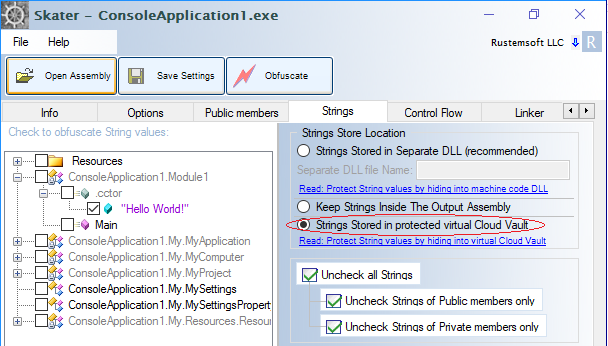 Strings Encryption Tab
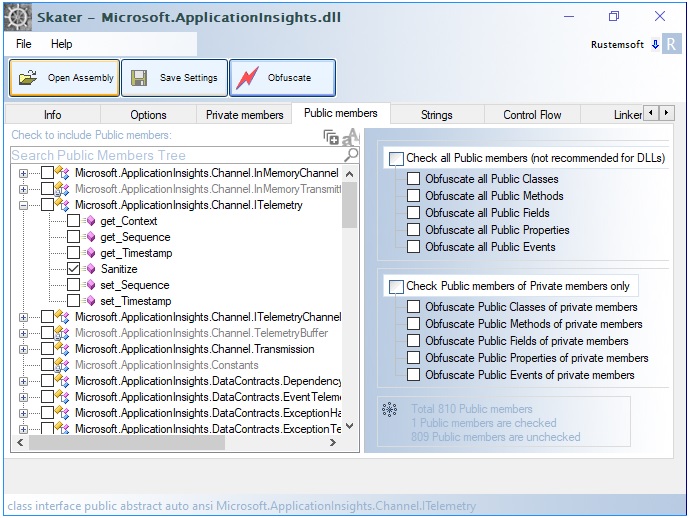 Public Members Tab
Edition Feature Comparison
Review the breakdown of protection levels across Standard, Professional, and Ultimate software tiers:
| Feature Capability | Standard Edition | Professional Edition | Ultimate Edition |
|---|---|---|---|
| Private Symbol Obfuscation | Included | Included | Included |
| Public Member Scrambling | — | Included | Included |
| String Encryption & Concealment | Basic | DLL Storage | Cloud Vault & DLL |
| Control Flow Protection | Standard Flow | Vigorous Flow | Aggressive Control Flow |
| Code Virtualization | — | — | Included |
| Command-Line / CI/CD Automation | — | Included | Included |
| WPF / XAML (BAML) Protection | — | Included | Included |
Obfuscation Technique Matrix
Understand how individual protection layers guard your intellectual property against decompilation attacks:
| Technique | Primary Target | What It Stops | What It Doesn't Stop |
|---|---|---|---|
| Name Obfuscation | Classes, Methods, Fields | Human code reading, reflection analysis, decompilers mapping C# method names. | Dynamic algorithm analysis and reverse string tracing. |
| String Encryption | Hardcoded Literals & Keys | Static string scanning, memory extraction, credential scraping. | Runtime memory dumping during active execution decryption. |
| Control Flow | Branching & Loops | IL decompilers (ILSpy, dnSpy), automatic code rebuilders, flowchart analysis. | Manual low-level instruction-by-instruction step debugging. |
| Code Virtualization | Core Assembly IL | All conventional decompilation into C#/VB code. Replaces IL with custom bytecode. | Performance-critical tight loop overhead (requires selective application). |
Frequently Asked Questions
Is Opaquer replacing Skater .NET Obfuscator, and how do licensing and updates work?
Yes, Opaquer is the direct official successor to Skater .NET Obfuscator. Built on over two decades of Rustemsoft security engineering, Opaquer streamlines binary protection for contemporary workloads. Existing active licenses for Skater .NET Obfuscator remain fully valid, and transition upgrade paths are available through Rustemsoft licensing portals.
Will obfuscating my .NET assembly compromise application safety, performance, or stability?
No. When configured correctly, obfuscation preserves application execution integrity while preventing reverse engineering. Advanced routines like Control Flow modification alter metadata structures and instruction layouts without altering functional output. Runtime overhead is negligible for standard applications.
Which Microsoft .NET frameworks and runtime environments are supported?
Both Skater and Opaquer support the legacy .NET Framework (versions 1.0 through 4.8.1) as well as modern enterprise runtimes including .NET Core 3.1, .NET 5, .NET 6, .NET 7, .NET 8, .NET 9, and upcoming .NET 10 assemblies. Full support for WPF (XAML/BAML), WinForms, ASP.NET Core, and console binaries is standard.
How do I integrate obfuscation into automated CI/CD build pipelines?
You can invoke the command-line interface directly within Azure DevOps pipelines, GitHub Actions, Jenkins, or MSBuild post-build target tasks. By referencing stored XML configuration files or passing execution flags like -SOURCE, -OUTPUT, and -FLOW, protection happens automatically during automated assembly packaging.
What is Code Virtualization, and how does it protect sensitive algorithm logic?
Code Virtualization transforms compiled CIL (Common Intermediate Language) instructions into a custom, randomized bytecode format that can only be interpreted by an embedded runtime engine. Because traditional decompilers like ILSpy or dnSpy cannot convert this virtual bytecode back to C#, reverse-engineering attempts are rendered ineffective.
Why use commercial protection tools over open-source de-obfuscation targets?
Open-source obfuscators often rely on static pattern transformations that automatic de-obfuscators easily reverse. Enterprise commercial solutions provide multi-layered defenses—combining symbol scrambling, string encryption into cloud or external vaults, vigorous control flow mangling, and continuous updates against emerging decompilation utilities.
What improvements does Opaquer introduce over previous Skater releases?
Opaquer modernizes the toolchain with enhanced execution speed, simplified command-line options, direct cloud-vault string protection integrations, native multi-platform pipeline support, and upgraded control-flow algorithms engineered specifically for high-performance .NET 8+ JIT runtimes.
Licensing & Order
Explore commercial edition pricing, upgrade paths, and licensing terms.
Download Center
Get the latest installers for Skater .NET Obfuscator and Opaquer tools.
User Manual
Access complete online documentation, CLI flags, and API reference guides.
Tutorials & Articles
Step-by-step guides for Azure DevOps integration and WPF protection.